Entering Ukraine
For defence and dual-use companies across NATO and allied markets
How the market actually works, what it costs to enter, and what it returns. Four routes in, costed. Thirteen documented entrants, February 2022 to July 2026.
What we set out
to answer
Our team spent four years inside this market. We analysed what actually blocks a foreign company from entering Ukraine, went through the companies that already tried, and turned it into recommendations for entering without burning the first year.
What is inside
Ten findings.
Seven to enter, three to plan around
Battle-tested became a budget category
NATO agreed 5% of GDP on defence by 2035. EU SAFE lends member states EUR 150bn and permits buying with, for and in Ukraine.
For a whole class of vendors, the only accessible market
The West asks a company to survive one to two years between demonstration and a programme of record. Ukraine lists a verified product in weeks.
A cost problem everyone has, and only Ukraine has fought
A $1,400 Sting interceptor reports 90% effectiveness. A Patriot interceptor costs about $4m, a THAAD $12m to $15m.
$19bn of capacity, no longer Ukraine's alone to fund
Capacity reached about $35bn in 2025 against a funded envelope near $16bn. SAFE money and the state export mechanism open a second route to demand.
The exportable product is the operational knowledge
Drone cooperation agreements closed with six NATO countries, seven more targeted. The packages carry technology transfer and training, not finished units.
Software enters through a shorter door than hardware
No plant, no export licence, under $1m of capital in the documented cases. The binding constraint is integration, and the ecosystem favours open standards.
Ukraine is two markets, and conflating them misleads
Axis A is a revenue market: local entity, local production, Ukrainian contracts. Axis B is a validation ground converted into credibility elsewhere.
The funded market is concentrated, which makes it targetable
Of the $6.8bn defence technology market in 2025, unmanned aerial systems were 93%. Outside air systems the customer is the Ukrainian manufacturer.
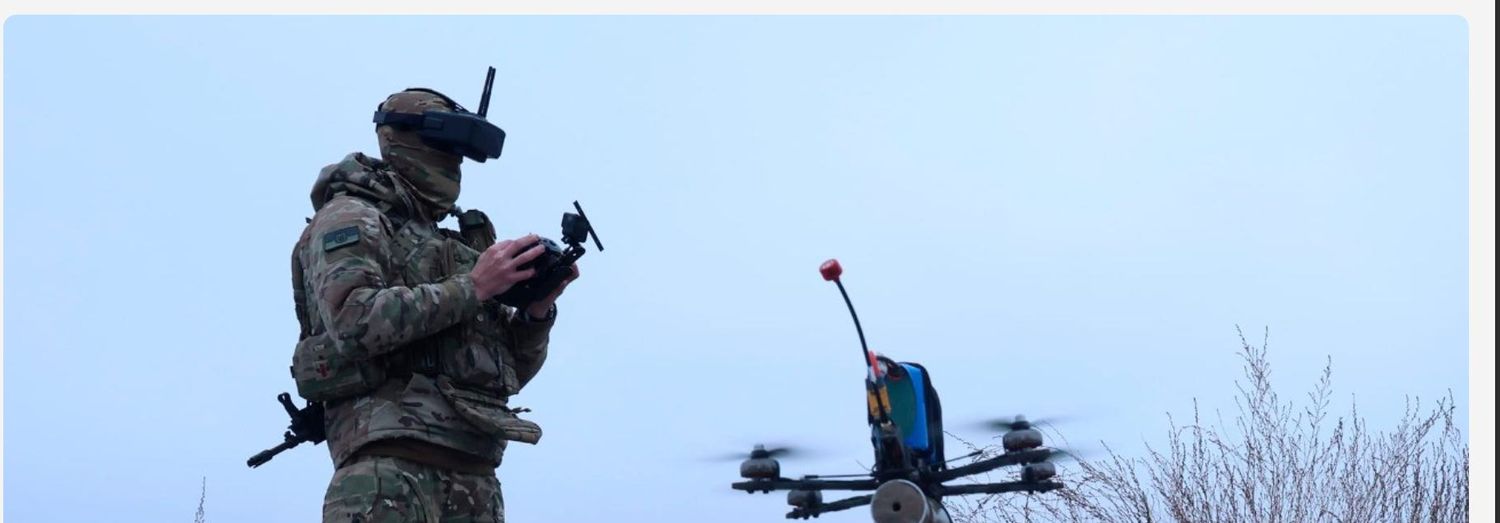
In joint exercises Ukrainian drone operators defeated a NATO combat group so completely the exercise was reset. That operational learning is the exportable product, and a ceasefire does not diminish it.
The cost curve Ukraine solved
and nobody else had to
Read this in context. These are not like-for-like systems. Patriot and THAAD are built to intercept ballistic and cruise threats at range and do work a counter-drone interceptor cannot. The comparison holds for one task only, mass-produced attack drones, and that is precisely where the cost asymmetry bites: air defence designed for missiles spends two to three orders of magnitude more per engagement than the attacker.
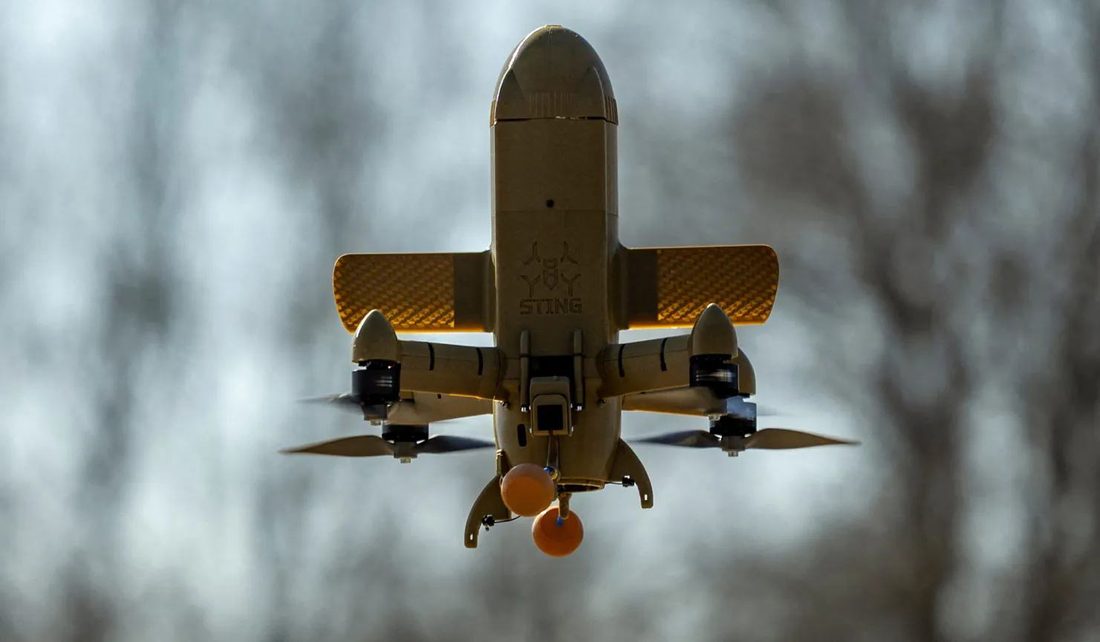
Source: DARC Research, Exhibit 08.
Entry is not one decision.
It is four routes
From our conversations with Ukrainian manufacturers and with companies already on the ground, these four routes differ by an order of magnitude in capital and by two years in time to revenue. Most companies drift into route 1 because it requires no decision, then discover it does not convert.
Validate only
- Capital
- Under $1M
- First revenue
- None by design
- UA entity
- No
- Return
- Product truth, NATO credibility
Supply Ukrainian makers
- Capital
- $1M to $5M
- First revenue
- 3 to 9 months
- UA entity
- Usually not
- Return
- Revenue without market position
Sell direct to units
- Capital
- $2M to $10M
- First revenue
- 6 to 18 months
- UA entity
- Yes in practice
- Return
- Revenue and operator feedback
Localise production
- Capital
- $6M and up
- First revenue
- 12 to 24 months
- UA entity
- Yes, Defence City eligible
- Return
- Market position, tax relief, export base
Where entrants lose the most time
The product fails under electronic warfare and the company reads it as a Ukraine problem rather than a product defect.
No Ukrainian legal entity, so no route to a domestic contract and no access to Defence City.
A memorandum is signed, capital is never committed and the plant is never built.
The counter-argument,
stated fairly
A reader can object that the market axis barely exists. Defence technology investment of $105m to $129m in 2025 is immaterial against $35bn of capacity, and the boom happened largely without venture backers. On that reading, foreign entry is a validation story with an industrial footnote.
The evidence partly supports this, which is why we scored the market axis conservatively and separates announced from built capacity. The counter-evidence is timing: Defence City opened in January 2026 and the export mechanism in July 2026. 2027 is the first year in which either can be judged.
Risks the entrant carries
- Physical. Plants, staff and inventory are targets, and insurance is thin. This is the cost the tax regime does not offset.
- Regulatory. Procurement, tax and export rules have all changed within two years. The changes have favoured entrants so far, which is not a guarantee.
- Funding concentration. The Danish model supplied about $6bn of a roughly $16bn 2025 envelope. Political change in contributor states transmits directly into Ukrainian order books.
- Technology and competitive. Transferred designs sit with a wartime counterparty, and the export mechanism will eventually put Ukrainian-made products into competition with their foreign partners' own catalogues.
- Dependency, both directions. Starlink shows the reciprocal case, and hosts have begun to price it in.
The window is open.
The advantage will not be
Thirty-eight pages on how this market actually works. If Ukraine is a market you are weighing, we will talk through your segment specifically, not our services.